

Brands today face a complex challenge when it comes to personalization.
On one hand, customers have grown more and more concerned over how businesses are using their information, stressing the importance of data security and privacy protections. On the other hand, they’re also demanding tailored experiences that cater to their individual needs and preferences.
It’s confusing and contradictory — but also not surprising if you consider our history.
Cinema offers a great metaphor for this. Alfred Hitchcock’s “Rear Window” opens with the raising of a curtain. This is a tribute to classic theater — a raising curtain has been shorthand for “the show is about to begin” for centuries.
However, something is a little different here. These are not traditional theater curtains, but rather a window curtain. This, of course, raises the question: What kind of show would be watched through a window? A voyeuristic one.
The Dual Nature of Voyeurism
Culturally speaking, “voyeurism” has a rather seedy reputation. But in Hitchcock’s film, the voyeur was also the hero, played by none other than legendary actor Jimmy Stewart. In “Rear Window,” the wheelchair-bound photographer spying on his neighbors is able to solve a murder — classic hero, right?
Hitchcock was also playing a deeper game here. He knew who the real voyeurs were — the audience. After all, it’s us, not Jimmy Stewart, eagerly awaiting the opening of those curtains.
Hitchcock understood this to be the unwritten agreement between filmmakers and the audience:
- The audience wants to be voyeurs. They want to anonymously hide in the dark and see something they are “not supposed to see.”
- The filmmaker’s side of the deal is to deliver relevant content worthy of the audience’s voyeurism. (Murder, affairs, crime, scandal and the human condition are some of Hitchcock’s favorite themes.)
Storytellers for millennia have understood that there’s a bit of voyeurism in all of us. Despite our requests for privacy, there’s also a part of us that understands the value that comes from watching and studying about others.
By making the voyeur the hero, maybe Hitchcock is saying that it can be a good thing to want to go to the movies, hide in the dark and be voyeuristic for a bit. Perhaps it’s a way of justifying our own desires if we can tell ourselves, “See, something good might come of taking a peek?”
From Masses to the Individual: Cinema Evolved
Of course, film and video are no longer solely consumed in dark theaters. Video is now used everywhere from cinema to smartphones and beyond. We still expect to be entertained via video — but we also expect to be informed, educated, spoken to and heard from, all via the magic of the moving image, enhancing the overall user experience.
The rising curtain is no longer the most common shorthand for, “The show’s about to begin.” Clicking “Play” is the modern-day indicator for “showtime.”
And thus, the creator-audience contract must evolve accordingly. It’s no longer just us, the audience, wanting to take a peek at a character’s life for entertainment. Video is a form of communication — and communication is a two-way street. Technology has led modern consumers to expect their media to observe and understand them throughout their customer journey and across various touchpoints.
For instance:
- Websites now use algorithms to selectively show website content on the homepage and other webpages based on my preferences, location and behavioral data history. This advanced website personalization gives rise to the “filter bubble.”.
- Gmail suggests ways to finish sentences based on my own common speech patterns.
- My news feed is biased towards my biases.
- Ads use retargeting to follow you across the internet based on your past signs of interest and browsing history.
As a result, we’ve increasingly come to expect messaging to be relevant to us as individuals and to cater to our individual preferences.
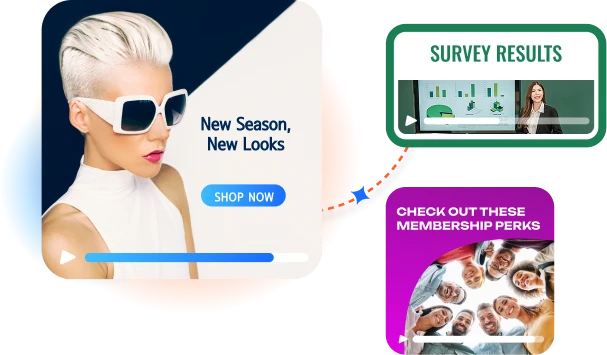
Video has historically been made for the anonymous masses hiding voyeuristically in the dark. Now, Next Generation Video — personalized, interactive, data-driven — takes it from the masses to an individual customer an audience of one.
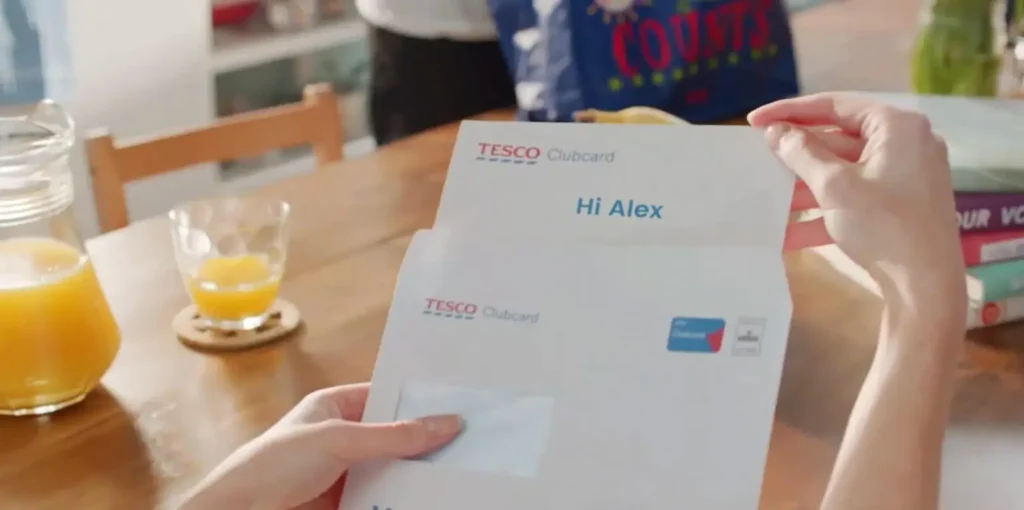
Personalized Video allows creators and marketers alike to address their viewer by name, showing them their specific data and scenes and tailored content specific to their unique circumstances.
But wait, the concerned viewer says, “If my video starts out addressing me by name — if my video knows who I am and has data and personalized messages tailored just for me — then I can no longer feel anonymous. I can no longer escape into the safe thrills and anonymity of cinematic voyeurism.”
It’s true — it is hard to hide anonymously when you are being called out by name.
So the question becomes: Should we let the audience know we are tailoring the message uniquely to them? What level of personalization strategy enables effective personalization but not “creepy?”
How Much Personalization Is Too Much?
Data-driven video lets marketers, filmmakers and more tailor their message to the individual. But should they? And if we do tailor the message, should the audience be aware of it? Or, should we customize their messaging subtly so they can maintain a sense of anonymity that keeps them feeling comfortable, safe and nameless through careful personalization efforts?
The answer largely depends on, “What are they already used to?”
Post on

There’s not always a “one size fits all” answer. The key is understanding your target audience(s), including the various audience segments within your larger customer pool, and then addressing the needs of each specific audience. You should be able to scale up or down the level of personalization according to their preferences.
For example, some demographics, like younger audiences, appear more comfortable with personalized messaging, seeing it as normal rather than a novelty. In fact, according to the State of Video Technology, 81% of Gen Z and 80% of millennials are willing to share customer data for personalization as opposed to 62% of baby boomers.
Customers also have different standards for different industries. After all, getting a detailed breakdown of your customer behavior and listening habits through Spotify Wrapped has become a cool event to share with others. Your bank mapping out all the places you used your card at this week, , or displaying past purchases and product recommendations, though? Probably the wrong way to personalize.
In industries like healthcare or finance, customers may be more cautious about how their data is used across different customer segments, while in ecommerce or entertainment, they’re more likely to embrace a highly tailored experience.


This is why solutions that dynamically allow for different dynamic content with enhanced functionality for different users are so powerful, helping to streamline operations. You can fine-tune the level of personalization for each individual, making sure it helps optimize their experience without overwhelming them. You want to use data that’ll actually add value, rather than simply personalizing for the sake of it, thereby improving content management.
For instance, if the relationship is fairly new or if the situation doesn’t call for deep personalization or addressing specific needs, you shouldn’t stuff the video with invasive or irrelevant data points. Instead, you could empower the viewer via interactivity.
Take EE’s introduction of their new offerings. The video starts by greeting the customer by name, a standard content delivery personalization tactic that’s widely accepted — after all, it’s no surprise that your phone company knows your name!
From there, they let viewers personalize their experience by picking the options they want to explore. The power is in the viewer’s hands, creating an engaging and personal experience, driving customer engagement without overstepping boundaries.
Demand for Personalization Grows
While personalized interactions could be overwhelming for potential customers, once they become loyal to a brand, customers start to expect that brand to understand their needs and provide tailored experiences. Personalized content is then no longer a nice-to-have but an expected part of the customer experience. So customer loyalty must be earned as consumers demand meaningful content personalization.
What might have made audiences uncomfortable even a decade ago is now often viewed as a necessity.
- 90% of consumers find personalization appealing.
- 76% of customers get frustrated when companies don’t deliver personalized interactions, which can hinder customer retention.
- 65% of consumers say they’ll stay loyal to a company if it offers a more personalized experience that builds trust..
Why have people embraced personalization? A big part of it is relevant content. In discussing the logic behind Facebook’s news feed algorithm, Mark Zuckerberg explains, “A squirrel dying in front of your house may be more relevant to your interests right now than people dying in Africa.”
Indeed, audiences have progressed from being cautious about personalization to having certain expectations of what you should know about them. Whether it’s their preferences, pain points or past interactions, they want you to leverage this data and craft an experience that genuinely makes their lives easier strengthening your overall marketing strategy.
During the onboarding stage is an excellent time to do this to maximize your overall marketing efforts, especially in email marketing. This is your chance to start things off on the right foot by offering information that’s tailored to their situation, perhaps via a personalized email, rather than a generic one-size-fits-all approach.
Volkswagen does a great job of this with its personalized onboarding video. It greets customers by name and breaks down their finance plans, including details about the term, APR, monthly payment amount and other specifics.
Ultimately, when brand communications are specific to a customer’s situation, it improves relevance and adds greater value. That means higher conversion rates and a healthier bottom line.
Our clients have seen real results from customer onboarding campaigns just like Volkswagen’s, including 10x more engagement, improved click-through rates, 31 additional NPS points and 54% fewer support calls, indicating effective calls-to-action.
When you personalize the experience, your customers respond — and they reward you.
The Next Generation of Video
Just as cave drawings gave way to hieroglyphics and storytellers enjoyed millennia of oral traditions before the advent of the written word (and later, movies), so too, the moving picture has come a long way since Hitchcock’s time. The screen has gone from the theater to, well, everywhere.
The question becomes: In the future, will the audience accept just any static video, or will their standards continue to rise so that they’ll reject any brand message that isn’t tailored to them?
As audiences come to demand more from their side of the agreement, it’s on filmmakers — and that includes video marketers — to evolve accordingly. It’s time for creative professionals to innovate and leverage advanced technologies that can support personalized, interactive content creation at scale.
This is where Idomoo’s platform and its powerful personalization tools come into play (pun absolutely intended). Our enterprise-grade platform combines data, automation and, if desired, AI to help businesses track key metrics and deliver the right message to the right person at the right time, in real-time.
If you’re ready to take your video marketing to the next level, reach out today and we’ll walk you through what our platform can do for your business.
End scene.