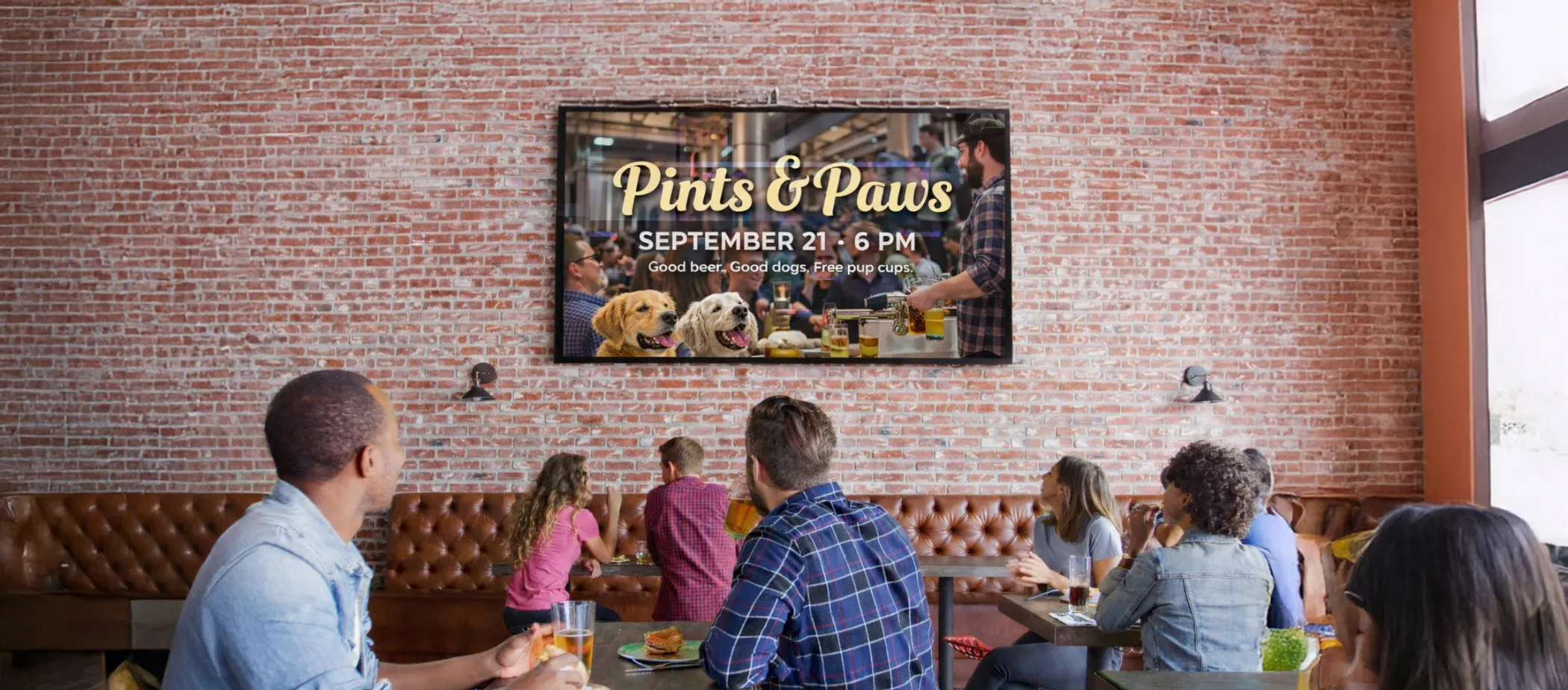
For years, digital signage has been getting bigger, brighter and sharper. But video content? That’s been a bottleneck.
Screens have evolved faster than the way brands create for them, which is why signage often feels generic and just plain ignorable. Video catches attention, but creating and updating those videos takes time and resources most businesses, especially SMBs, don’t have.
That’s exactly the gap Samsung set out to close with Samsung VXT, its cloud-native content management platform designed to unlock the full value of screens. And it’s where Lucas AI Video Creator comes in.
By integrating Lucas directly into Samsung’s VXT Canvas, brands can now generate, edit and deploy AI-powered video content inside the platform itself — turning digital signage into a dynamic, engaging medium instead of a static display.
From Bland Signage to Real-Time Video
Samsung VXT Canvas gives brands a flexible design environment for building screen layouts. Lucas extends that flexibility into motion.
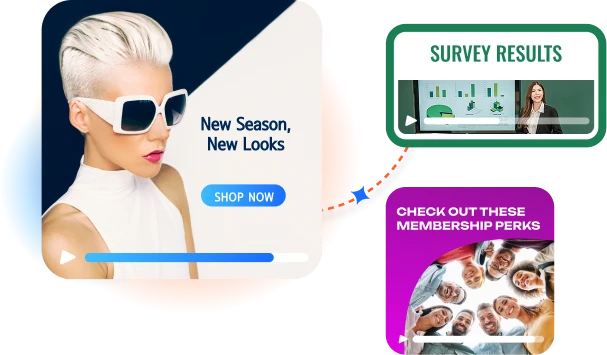
Because Lucas generates video programmatically, content can adapt based on data inputs, whether that’s location, product availability, language or timing. The same screen layout can display different video content across regions or even individual displays.
Through Idomoo’s API, Lucas is accessible directly in Samsung VXT Canvas, allowing users to create AI-generated videos in seconds — without leaving the CMS or requiring specialized video skills.
- Need a video update across hundreds of screens? Done.
- Need to tailor content by location, time of day or audience? Easy.
- Need to refresh visuals on the fly? No production cycle required.
Take a look at how it works.
With Lucas, video creation becomes part of the workflow, not a blocker.
Why AI Video Belongs Inside the CMS
More and more, video is a core part of how enterprises communicate, especially across diverse locations and audiences. To be effective at scale, video needs to stay flexible, fast and easy to update as content changes.
Samsung VXT is designed to treat content as a living system rather than a static asset. With Lucas integrated into VXT Canvas, that same flexibility extends to video, empowering teams to generate, edit and adapt video content at the pace their signage demands without adding complexity to their workflows.
There’s no exporting, no file juggling, no waiting on an external studio. Video becomes just another adaptive content type, only far more powerful.
This matters most in environments where content changes frequently and relevance is key: restaurants, retail, education, healthcare, hospitality and corporate communications, to name a few. Content can reflect what’s happening now, not what was planned months ago.
Picture it:
- A menu board that updates instantly when an item sells out or a daily special changes
- A retail video that reflects the latest promotions or new arrivals (with current availability)
- A campus display highlighting today’s events or seasonal programming
- A hospital lobby screen updating visiting hours or wayfinding in real time
- A video ad in a fitness center promoting upcoming classes
Screens stop being passive billboards and start acting like communication channels — and that’s exactly the direction industry leaders are moving if NRF 2026 is any indication.
Built for Scale, Designed for What’s Next
What makes the Lucas and Samsung VXT integration powerful isn’t just speed — it’s how well it scales.
Lucas doesn’t rely on stitching together clips or HTML-based shortcuts. Under the hood, he’s creating videos on Idomoo’s enterprise-grade rendering engine, generating each video as a fully rendered, cinematic asset, even at massive volume, automatically tailored to your brand voice and style (i.e., not just fonts and colors). Visual quality stays high. Brand standards stay intact.
For Samsung VXT users, that means AI-generated video that actually looks at home on premium displays, whether it’s a single screen in a cafe or thousands of screens for a franchise or global brand.
If you’d like to see how AI-powered video can work for you, get in touch. We’d love to show you what’s possible.